By Pam Sander
Storyteller and LaMonaGirl Shop owner
I went to my first-ever estate sale last November when my sister and I met in Charleston, S.C., for a cruise aboard the Carnival Sunshine.
The three-story townhome in downtown Charleston had been built well before I was born. The neighborhood near the waterfront seemed as tight-knit as it had likely been many years earlier. When we entered, Cindy charged toward a rack of clothing in the distance; I moved slowly. We were invading someone’s home. I was a little uncomfortable. Did the person die, I wondered, possibly in this house?
A young couple greeted us in what once had been the parlor. Within minutes, the journalist in me had interviewed them. The home belonged to Lucy’s grandmother. Though they didn’t say specifically where she was (I did ask), I hoped “better place” meant assisted-living community.
By the time I started looking at the clothes, Cindy had an arm full, circa early 2000s, some pieces still with tags.
I gravitated to the much older clothes lying across an antique couch in front of the fireplace. Did Lucy keep any of her grandmother’s clothes, I asked, since she seemed the same size. A few things, she said, but most of them weren’t her style. That’s something I’ve learned through other estate sales since then. The kids don’t want our stuff.
Within minutes, I had created a whole story about the life of Audrey, the name I gave the tiny woman whose clothes reminded me of actress Audrey Hepburn. I envisioned Charleston Audrey’s spit-fire approach to life – in charge of her world or else she would not have sported pants on this street in the 1950s and ‘60s. Several pieces were from New York boutiques, which told me she was an independent thinker and well-to-do.
By the end of the sale that day, I had selected three outfits. My sister looked at the labels and said quietly, “Boutique brands and small sizes don’t resell well.” I was thankful for her advice, but had already grown attached.
On the other side of the cruise, back home in Wilmington, I tucked Audrey’s clothes into the back of my expanding inventory closet. I would need to research the pieces and get a mannequin small enough to give them proper display.
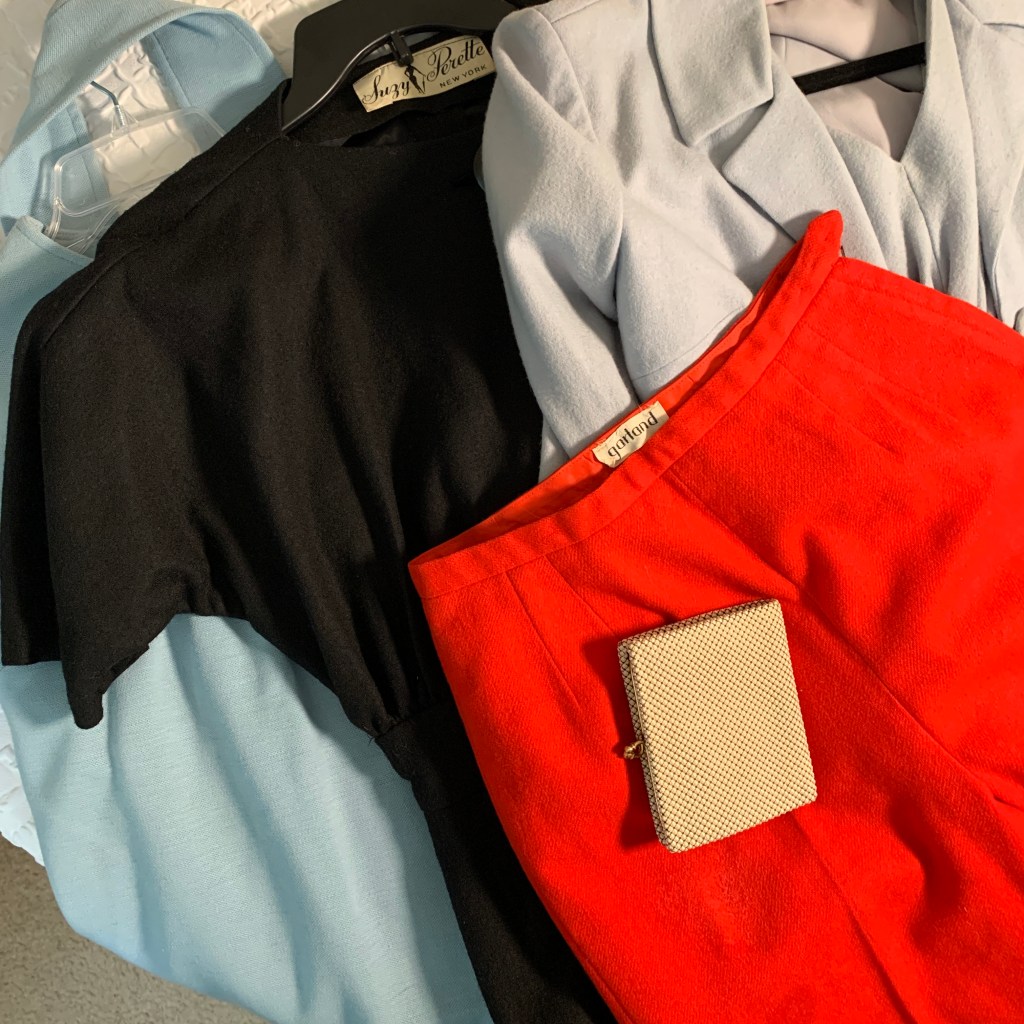
Periodically, as the months passed, I pulled them out and studied. Garland, Carlye, Camelon, Suzy Perette, Whiting & Davis — turns out Google doesn’t know everything.
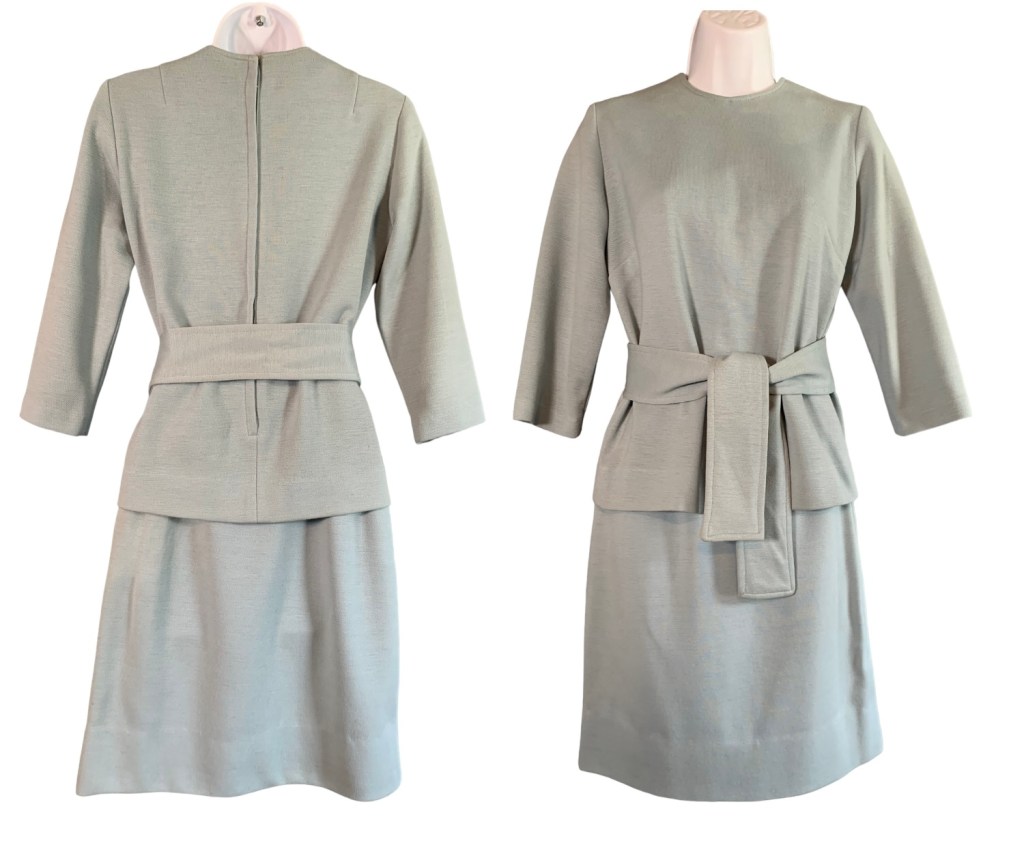
Recently, I photographed the outfits on my new, smaller mannequin. My friend Jayne saw them and was as smitten as I was. She wondered if I had seen gloves in the Charleston house. Certainly, Audrey would have worn matching long gloves and hats with these spectacular pieces, she said. I hadn’t even looked, I told her. I didn’t know enough then.
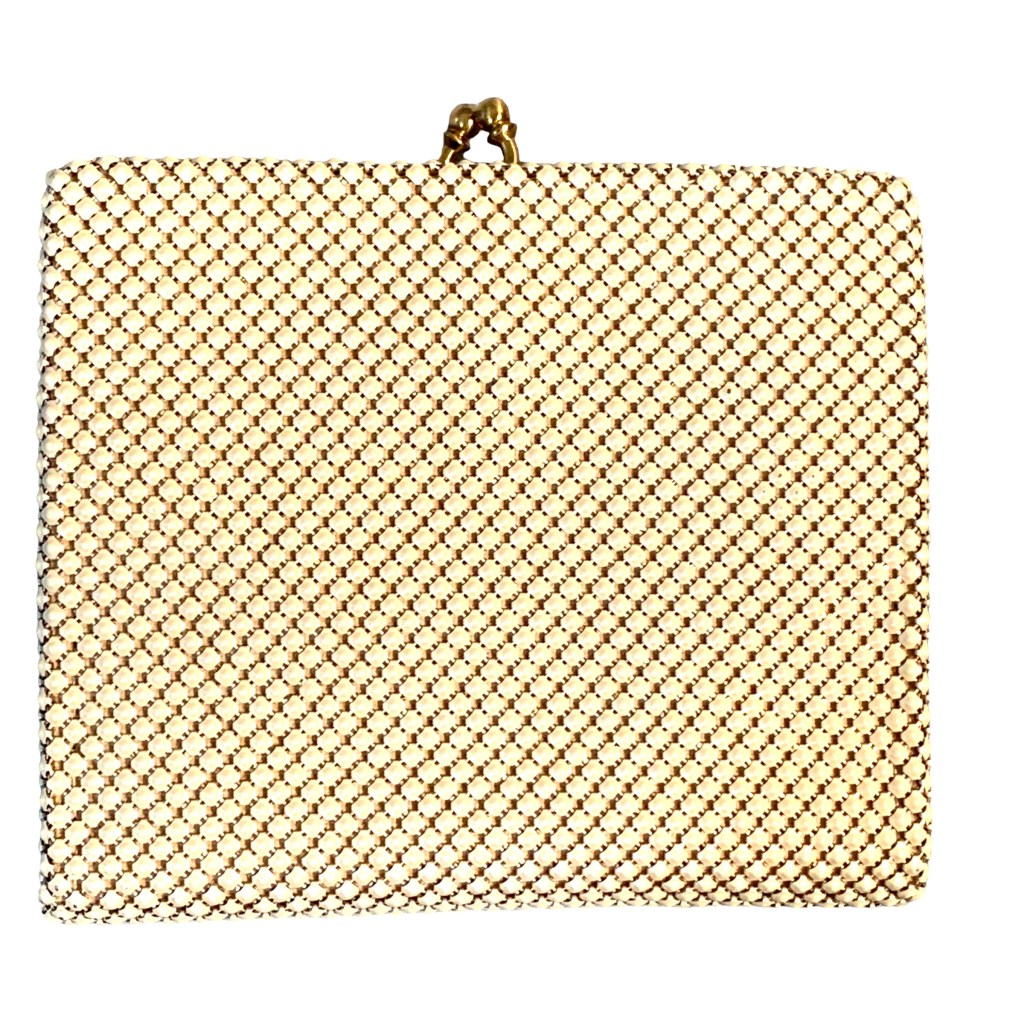
What about purses, Jayne asked, the small ones women carried for tissues and lipstick. I showed Jayne a photo of a tiny evening bag. What a delight, she said.
Today, I’m introducing you to Charleston Audrey through a small sampling of her clothing and what little I’ve learned. If you know more, please share.
from Charleston Audrey’s closet.
Knits by Cameleon blue skirt set, with belted top. There’s no material label, but both are worsted wool, which comes from long-staple sheep living in lush, green pastures. The outfit is a vintage Size 7 and measures like a 0/XS by today’s standards. The top has a back zip and three-quarter-length sleeves. The pleated skirt is partially lined with acetate and has a side zip. Both zippers are metal and hidden. Online resellers who have listed Cameleon vintage clothing date it to the 1960s-1970s, and I believe Audrey wore this in her 20s and 30s, which makes those decades about right.
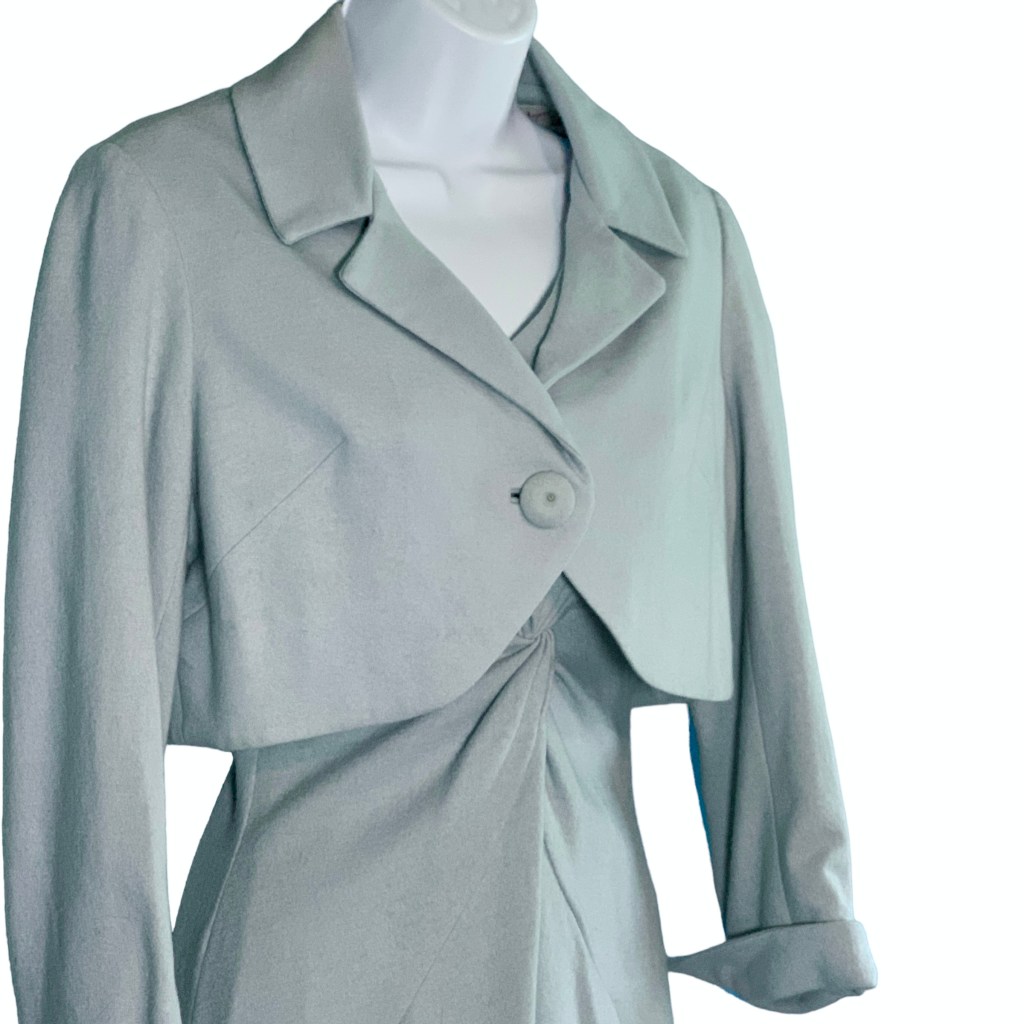
The Carlye at Charleston SC Sincerely Rosalie Meyers woolen (not worsted) dress and short jacket. The dress has a twisted-fabric bodice and empire waist. The zipper is metal, but dyed the blue of the dress. The acetate-lined bolero has cuffed long sleeves and a fabric button close. The label suggests the set is from the 1950s. Carlye was a St. Louis dress manufacturer that served boutiques. In the mid- to late 1960s, Carlye was bought by one of my favorites, Leslie Fay (Milliner Fred). I’m still trying to learn more about Rosalie Meyers, who would have owned the Charleston boutique where Carlye was sold. I’m sure that shop has stories to tell.

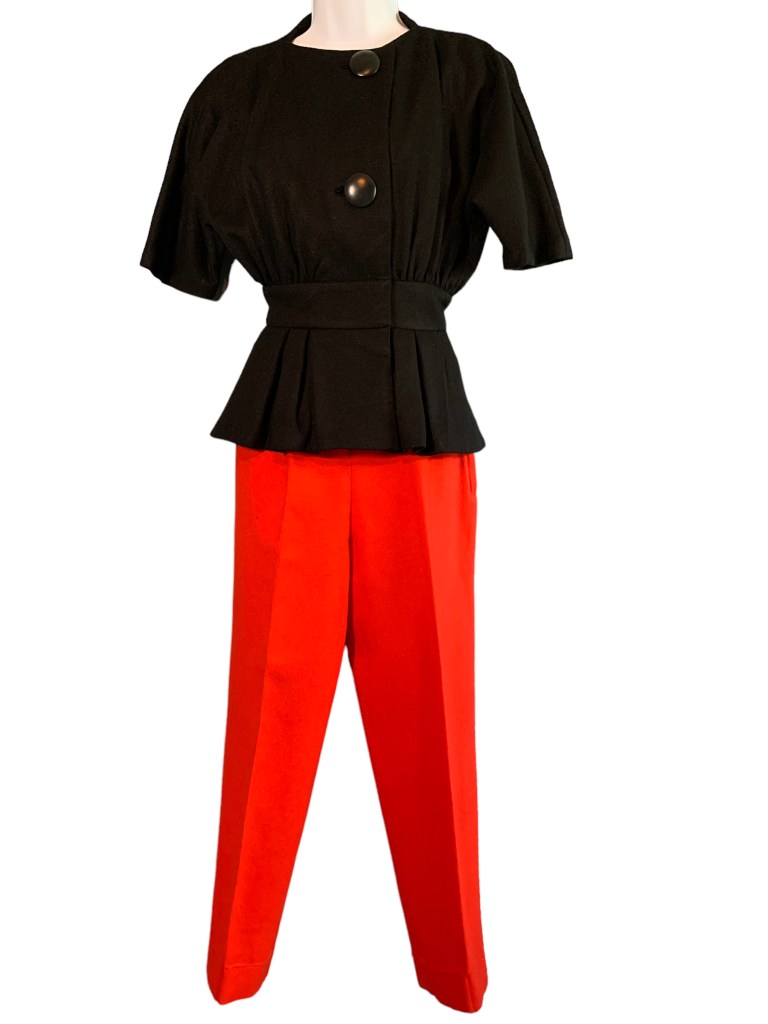
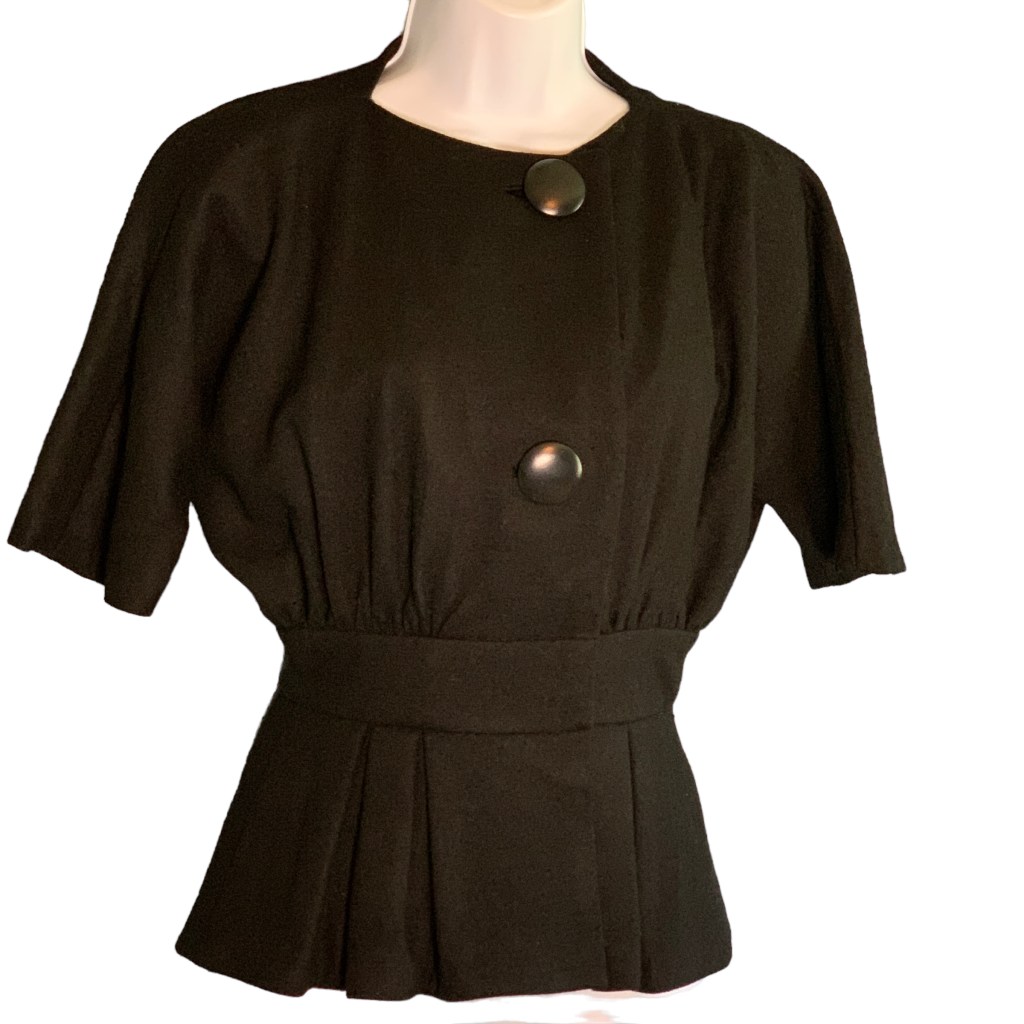
Garland red trousers. These are wool as well, with a side zipper. They are flat front with straight legs and 1-inch slits at the bottom openings. I think they may date to the 1950s because Garland in the ’60s started widening the legs.
Suzy Perette New York fit-and-flare silhouette. This is what journalists call burying the lead. The fitted-waist style from Perette (not a person, but a manufacturing company in NYC) was one way the House of Christian Dior brought his famous “New Look” to American women in the 1950s, after releasing it to the French fashion elite in the late ’40s. According to the Vintage Fashion Guild, an incredible resource for anyone interested in fashion and education, the owners of Perette paid Dior $2,000 and royalties for the right to use the glamorous Parisian design.
Audrey Hepburn definitely would have approved of Charleston Audrey joining the “New Look.”
 LAMONAGIRL.com
Leave a comment